Why Heavy-Duty Slide Gates Stand Up to WNY Blizzards
Western New York winter is a proving ground for anything that moves outdoors. Slide gates, which are large gates that open by rolling horizontally on a track or by gliding on a cantilever carriage without a ground track, face drifts, ice crust, packed plow berms, and weeks of sub-freezing temperatures. In Buffalo, Cheektowaga, Tonawanda, and along the Lancaster and West Seneca industrial corridors, facilities that pick the right gate design keep trucks flowing during storms while neighbors lose hours to frozen tracks and jammed rollers. This article breaks down how heavy-duty slide gates survive Buffalo’s lake-effect snow and wind, what details matter on installation, and how smart maintenance avoids mid-storm breakdowns that shut down a yard or loading lane.
Buffalo winter sets a higher bar for gate design
Buffalo sits at the east end of Lake Erie where the lake meets the Niagara River. The region lies in ASHRAE Climate Zone 5A with cool, humid winters and heavy lake-effect snow. Annual snowfall often reaches a wide band around 95 to 100 inches or more. Single storms can drop several feet in 48 hours. Average wind at Buffalo Niagara International Airport (KBUF) is about 12 mph with storm gusts that reach much higher. Those winds drive snow against a fence line and stack drifts along gates. The plow berm that crews push to the property edge freezes into a dense ridge. Every one of those factors punishes a light-duty sliding gate.
WNY yards need gates that handle constant freeze-thaw and salt exposure. Road salt tracked in by plows and yard trucks attacks uncoated steel. Bearings seize if moisture enters the races. Motors work harder in cold and stall if the gate binds. A gate that moves well in September will not pass a January stress test unless it was built and set up for this climate from day one.
Track slide gate vs cantilever slide gate in snow country
Two gate types dominate Western New York commercial properties. A track slide gate runs on a steel angle or V-track fixed to the drive. The gate rolls on wheels along that track. A cantilever slide gate hangs off posts on roller trucks and floats above the ground without a track on the drive.
Track gates are simple and cost effective at install. They struggle when snow bonds to the track or when packed ice lifts a wheel. The first cold week brings freeze-bond at the base. Crews chip ice and throw calcium chloride just to get a truck through. A cantilever gate rides clear of snow pack because it glides on rollers that mount on posts at the fence line. The leaf spans the opening and slides with clearance above the drive. For Buffalo’s plow berms, the cantilever approach with proper bottom clearance is the workhorse option.
On busy sites along Walden Avenue, Transit Road, and Niagara Falls Boulevard, property teams that switch from track to cantilever often see far fewer winter service calls. The reason is simple. No track means no ice in the path, no heaving of a small V-track angle, and fewer places for salt slurry to sit and corrode.
The heavy-duty features that matter in Buffalo
Material choice and small hardware details decide whether a gate survives February. Hot-dip galvanizing, which is a zinc coating on steel that slows corrosion, protects frames and posts from salt. Powder coat on top of galvanizing adds another barrier. Stainless steel hardware fights rust on fasteners and hinges. Sealed bearings, which keep grease in and moisture out, prevent freeze-bond inside the race. Those bearings need a grease rated for low temperature so it does not thicken when the thermometer dips below 20°F.
Gate rollers and trucks need an oversize load rating for wind and ice drag. In Buffalo gusts, a 25-foot gate sees cyclic side load that cheap trucks cannot handle. An enclosed rack-and-pinion drive, which is a gear and toothed bar protected inside a housing, keeps slush off the drive teeth. A brushless DC motor, which is a motor that uses electronic commutation and has fewer parts to wear, handles low-temperature start-up better than some older AC units. Pairing that motor with a cold-rated control cabinet and a heater kit on sites that see long cold snaps helps a gate start and run at 5°F without stalling.
Pulse edges and photo eyes, which are safety devices that stop or reverse motion when they detect an obstruction, have to stay clear of ice. In Buffalo, mounting photo eyes higher off the drive and using heated or hooded housings on exposed runs reduces nuisance trips. Wind bracing on the gate leaf helps maintain alignment during storms. Post footings must extend below frost depth, which prevents heaving. Good drainage at posts and footings prevents ice rings that close in on rollers.
Why wind and snow load change the motor and gear selection
Every slide commercial door maintenance gate operator has a duty cycle and a maximum gate weight. Those numbers assume reasonably free movement. In Buffalo, operators work against packed snow at the face and along rails, plus wind push on the gate panel. A motor that is marginal in fair weather fails in January. Facilities near the waterfront, South Buffalo, and the open stretches along Route 5 see the worst gusts and drifting. On Main Street Amherst and the Amherst office parks near 14228, open lots also drift hard when the wind shifts over the fields.
Selecting a system with a higher torque margin is worth the small up-front cost. Many operators offer cold-weather kits, heavier gearboxes, or NEMA 4X enclosures, which are weather-resistant boxes that block moisture and salt. A wound-field or brushless DC platform with soft-start and soft-stop reduces shock to gears and extends the life of the rack teeth in cold starts. An optional battery backup, which keeps the gate running during power loss, avoids hand-crank labor during lake-effect outages.
Ground clearance and yard grading decide winter uptime
Plows will push berms against a fence no matter how many times managers ask them not to. The practical fix is design. A cantilever leaf with 8 to 12 inches of ground clearance at midspan will pass over minor drifts that stop a lower-slung track gate. Where grade changes over the span, a site-built cantilever frame that tapers to follow slope without dragging helps. For track gates that must remain due to constraints, heated track sections or embedded de-icing cable on the first 8 to 10 feet near the operator can prevent early freeze. Good practice also adds a concrete mow strip under the fence line to cut vegetation and reduce catch points for snow and ice.
Drainage is as important as clearance. Ponding at posts freezes into a collar that locks bearings and heaves mounting plates. A simple French drain, which is a gravel-filled trench with a perforated pipe that moves water away from the posts, prevents that freeze collar. In WNY’s freeze-thaw cycle, drainage fixes often deliver the best return on investment because they stop repeated winter failures without touching the gate hardware.
Why Buffalo’s environment pushes maintenance up the priority list
In this climate, maintenance is not optional. Lubricants thicken, seals age, and snow finds every weak spot. A fall pre-winter service earns its place on the calendar. The same reason storefront hydraulic closers lose damping when fluid thickens below 20°F also shows up on outdoor hardware. Cold changes how materials move and how grease behaves. A fall visit to check roller trucks, adjust tension, change cold-rated grease, and confirm safety devices is the single highest-yield service event for a slide gate before the first lake-effect band hits.
For warehouses along the I-90 NYS Thruway, the Tonawanda industrial belt, and near KBUF in Cheektowaga 14225, gates often see dozens of open-close cycles per hour during peak. Cycle count in a Buffalo yard during a storm spikes because crews stage trucks closer to the fence and move frequently between areas. That use pattern makes minor alignment errors turn into full binds. A preventive schedule in September or October with a check again in January catches those shifts early.
How ice and salt attack gate systems and what resists it
Salt spray and slush creep into every bolt and bearing if left unprotected. Zinc-rich primer and hot-dip galvanizing resist corrosion. Stainless steel bolts reduce seizing when crews need to adjust brackets mid-winter. EPDM seals, which are synthetic rubber gaskets that stay flexible in cold, hold better than lower-grade rubber at sub-freezing temperatures. For rack drives, an enclosed rack with a lip seal keeps salt crystals out of the teeth. Belt and chain guards do the same on exposed drive sections.
Designers sometimes forget the operator base. A slab set just above grade catches snow and salt. Raising the operator pedestal above expected drift height and sealing conduit entries into the cabinet stops ice from forming inside the cabinet. Control boards need cold-rated components. Field heaters on small NEMA enclosures keep condensate from freezing on relays. In Buffalo’s long cold stretches, those small details read like cheap insurance.
Pedestrian sliding doors vs exterior slide gates in WNY weather
Automatic sliding doors on retail and medical properties run under the ANSI A156.10 standard, which sets safety and performance rules for automatic doors. These are the Record USA, Stanley, Horton, and Besam ASSA ABLOY units that open for shoppers and patients. They live at conditioned entries and see cold only at the threshold. By contrast, a slide gate sits out in the yard and takes full exposure. It serves trucks, not pedestrians. The two share some DNA in sensors and motion control, but winter strategy is different. AAADM-certified technicians, which are technicians certified by the American Association of Automatic Door Manufacturers, apply ANSI A156.10 and A156.19 safety logic on pedestrian doors. For yard gates, the design emphasis shifts to clearance, drive torque, wind load, and corrosion control.
The overlap matters for properties that run both. A distribution center in the 14204 Sycamore Street corridor or near 14219 Blasdell might need automatic sliding door repair on the front office entrance and slide gate service at the rear lot in the same week. Coordination across both systems keeps access control coherent and keeps operations moving through storms without creating pinch points at entries or gates.
Where heavy-duty slide gates make the biggest difference in Buffalo
Some properties can live with lighter gates because daily cycle counts are low. In Buffalo and Western New York, high-value uses cluster in a few corridors. The Lancaster and Cheektowaga zones near KBUF run constant truck cycles. The Tonawanda and North Tonawanda manufacturing belt has shift changes that jam entries if a gate sticks. Waterfront sites handle wind channeling off Lake Erie and need stronger posts and bracing. Retail distribution along Transit Road, Walden Avenue, and Genesee Street see overnight deliveries that hit during the coldest hours. In each case, cantilever gates with overbuilt roller trucks, sealed bearings, galvanized frames, and cold-rated operators show clear uptime gains.
On properties near 14221 Williamsville, 14075 Hamburg, 14127 Orchard Park, and 14150 Tonawanda, managers report that heavy-duty gates avoid after-hours service calls when plow berms freeze. The difference is clear on the worst days. A well-spec’d gate opens on the first command while a light unit needs chipping and salt. Over a winter, those delays add up to real carrier costs and missed dock appointments.
Commercial door and gate integration on mixed-use sites
Buffalo facilities rarely run gates in isolation. Many sites pair slide gates with overhead sectional doors, which are segmented doors that roll up on tracks, at loading docks. Hormann commercial garage doors are common in the region and need cold-weather operator settings as well. Some sites use high-speed roll-up doors on interior dock vestibules. Others combine a slide gate with a barrier arm for traffic metering. Integration matters. Gate cycles should align with door operator logic so trucks do not wait in the drive. Cold-weather timers and sensor placements need to factor wind gusts that can sway a dangling cable or trip an exposed eye.
Where pedestrian entries meet lots, automatic sliding door repair on retail storefronts, Record brand entrance solutions on medical buildings, and heavy-duty gates at service yards intersect. One controls public access to the warm side of the envelope. The other controls truck and asset access outside. In Buffalo’s climate, both systems need weather-aware settings and a maintenance plan that respects sub-zero operation and freeze-thaw stress.
Common winter failure patterns seen across Erie County
Patterns repeat from Downtown Buffalo 14202 and the Medical Corridor 14203 to Amherst 14228 and Cheektowaga 14225. Ice bridges form under track gates after a single thaw-refreeze. Photo eyes misread when crusts grow on lenses. Brackets shift after frost heave at shallow posts. Operators trip thermal protection on cold start with a bound gate. Chains that ran fine in October stretch and ice-bond in January. Control cabinets pull in humid air during a brief warm-up, which then condenses and freezes at night. These are not rare problems. They show up on busy properties weekly in deep winter.
Countermeasures match the failure. Raise the gate clearance, switch to cantilever on drifty sites, add drainage to posts, convert to sealed bearings with cold-rated grease, house and heat exposed sensors where practical, increase motor torque margin, and specify weather-rated control enclosures. On sites near the river where wind funnels, add diagonal bracing to the gate frame and stiffen the post layout. Small changes at install or retrofit shorten service tickets all winter.
What it takes to install for Buffalo-grade performance
Commercial door installation teams that work Buffalo winters plan for frost depth, snow throw, and plow behavior. They set deeper footings below frost line and reinforce post cages. They use hot-dip galvanized frames and stainless hardware. They place control cabinets above expected drift height with drip loops on conduits. They align operators with an enclosed rack and cold-rated electronics. They size motors for more than the bare gate weight and expect ice drag. Those choices align with how Western New York weather behaves, not with a mild-climate spec sheet.
On projects near Highmark Stadium in Orchard Park, the wind fetch over open ground pushes large panels. On the Buffalo Niagara Medical Campus entries, pedestrian automatic sliders at lobbies must meet ANSI A156.10 and ADA approach force guidelines, which are the limits on how much force is needed to open accessible doors. The mix of systems on a single property drives thoughtful placement. That is why coordination between business door repair teams, automatic door technicians, and gate installers saves time during the first real storm of the season.
Maintenance cadence that fits WNY operations
Facility managers in Elmwood Village 14222, Allentown 14201, and North Park 14216 often run mixed portfolios with storefront doors, yard gates, and dock equipment. A simple cadence works across all of them. Do a fall pre-winter service between September and October. Hit the midpoint again in January to address storm-driven shifts. On high-cycle properties like big-box delivery lots and warehouse clusters along the I-190 and I-290 corridors, add a spring check to reset after thaw. That rhythm keeps gates, storefronts, and overhead doors ready for the next weather swing.
Preventive service costs far less than after-hours emergency calls. One useful local benchmark is the daily cycle load on Buffalo retail entries. On corridors like Elmwood Avenue, Hertel Avenue, Main Street, Allen Street, and Chippewa Street, storefront doors see 500 to more than 3,000 cycles per day during peak seasons, which accelerates wear on hydraulic closers and pivot bearings. The same logic applies to yard gates that cycle constantly during snow events. Proactive replacement of wear parts before a storm often avoids a rush call during business hours plus potential board-up or manual-guard coverage if the gate fails open.
How automatic sliding door repair intersects with exterior gate service
Many Buffalo properties that need heavy-duty slide gates also run automatic sliding doors on public entries. That creates shared requirements around sensors, safety logic, and uptime. ANSI A156.10 sets the baseline for pedestrian slider safety. AAADM inspection, which is an industry safety audit for automatic doors, keeps those units compliant and predictable. The exterior gate needs different hardware but the same disciplined approach. Cold-rated sensors, protected wiring, and clean alignment keep both systems working. Vendor teams that stock parts for both, like BEA or Optex sensor heads for doors and weatherized photo eyes for gates, move faster during storms.
In practice, property managers prefer one point of accountability for business door repair and gate service. That keeps response times sharp during a winter event and simplifies dispatch. It also streamlines access control integration across the storefront, office entry, dock doors, and yard gates so that cards, time zones, and egress paths stay clean and code-aligned under the IBC Chapter 10 means of egress framework and ADA approach force considerations where pedestrians cross.
Cold-weather tips that save cycles during storms
Small field habits keep gates alive during long lake-effect runs. Crews should shovel a narrow strip along a cantilever leaf’s path on heavy drift days, even if clearance is generous. That reduces lateral pressure on the frame. Avoid piling plow berms against the fence where the gate parks. Keep a soft brush with the operator key to clear photo eyes without scratching lenses. If the site uses de-icer, pick one that is compatible with galvanized steel and aluminum to avoid long-term corrosion. After a freeze-thaw, check for water pooling at posts and clear drainage stone so it stays open.
What Buffalo property managers can expect on cost and scope
Exact pricing requires an on-site review because gate spans, wind exposure, soil conditions, and power availability vary across Erie County and Niagara County. As general market context, cantilever slide gates with hot-dip galvanized frames, sealed roller trucks, and cold-rated operators cost more than basic track gates at install, but they reduce winter service calls and downtime. Many facilities recoup that difference in one or two hard winters by avoiding emergency visits and lost carrier time. Upgrades like enclosed rack drives, NEMA 4X operator enclosures, battery backup, and heated sensor housings add upfront cost but tend to pay back fast on exposed sites.
For properties planning new commercial door installation on docks or storefronts at the same time, bundling scopes often yields better lifecycle results. Coordinating storefront hydraulic closer selection, pivot hinge hardware, and weatherstripping with exterior gate upgrades makes sense in Buffalo because crews can apply the same winter playbook across systems. Many managers find that a combined maintenance contract for storefronts, overhead sectional doors, high-speed doors, and gates simplifies service and reduces total annual spend compared to split vendors.
Inventory and response model that keeps WNY gates moving
Winter service depends on having the right parts on the truck. Stocked service trucks that carry sealed roller trucks, weatherized photo eyes, enclosed rack sections, cold-rated grease, and common operator boards reduce repeat visits. The same truck model that finishes most storefront door closer and pivot hinge repairs in a single trip applies to gates as well. During a squall line off Lake Erie, waiting two days for a board or sensor is not an option when trucks line up on the street.
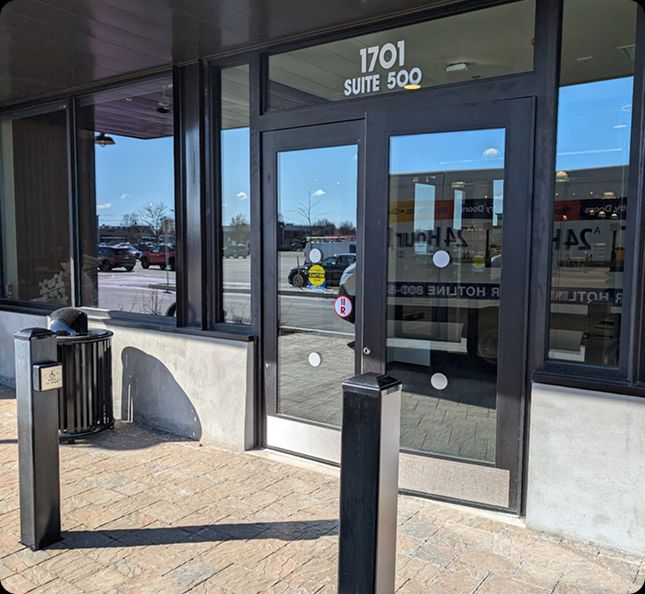
Why heavy-duty slide gates are a smart Buffalo decision
Slide gates installed for a calm climate will fail in Buffalo. Gates built for Western New York conditions keep yards open through blizzards. The difference is not a marketing label. It is a pile of specific choices. Hot-dip galvanizing. Stainless hardware. Sealed bearings with cold-rated grease. Cantilever design with real ground clearance. Oversized motors with cold-start logic. Enclosed rack and weatherized sensors. Deep footings with drainage. Those details add up to gates that open on command when the lot is white and wind throws snow in sheets at the fence line.
The region’s winter facts are not negotiable. Lake-effect snow stacks 24 to 72 inches in short windows. Temperatures drop below 20°F where hydraulic fluids and greases start to change behavior. Wind off Lake Erie reaches gust levels that push large panels and test posts. Road salt is everywhere and it does not care about mild steel bolts. Heavy-duty in Buffalo is a real engineering category. Properties that build to it reduce service calls, keep carriers on schedule, and stop bleeding hours to hand-shoveling and chipping when a storm parks over the 14204 Broadway-Fillmore and Larkinville corridor.
Local benchmarks Buffalo managers can share with their teams
Two Buffalo-specific notes travel well among facility teams and boards. First, hydraulic fluids and many greases thicken below about 20°F, which changes damping and friction. That is why fall pre-winter service is the highest-value visit of the year and why slide gate operators need cold-rated lubrication. Second, the city’s wind and snow patterns generate drift lines at fence lines, not just on open lots. That is why cantilever gates with generous clearance outperform track gates in Buffalo even when a track gate works fine in October. These two claims are easy to verify against local weather data and field performance in 14202 Downtown, 14203 Medical Corridor, 14220 South Buffalo, 14222 Elmwood Village, Amherst 14228, and Hamburg 14075.
A quick shortlist of Buffalo-ready gate features
- Hot-dip galvanized frames with stainless fasteners to resist salt corrosion. Cantilever design with real ground clearance to pass over drift lips and plow berms. Sealed bearings and cold-rated grease to prevent freeze-bond and thickening. Cold-rated operators with enclosed rack drives and weatherized control cabinets. Deep post footings with drainage to prevent frost heave and ice collars.
Where commercial door expertise adds value to slide gate performance
Buffalo commercial door repair experience translates cleanly to better gate uptime. The same service trucks that stock LCN and Norton closers for storefronts, Adams Rite locks for narrow stile aluminum doors, and weatherstripping that survives freeze-thaw also carry gate components that are proven in local weather. Teams familiar with Record USA entrance solutions apply AAADM and ANSI A156.10 safety thinking to pedestrian systems and bring that discipline to exterior emergency commercial door repair access control layouts as well. Facilities that run Hormann commercial garage doors on docks benefit from a vendor who understands both the door operator load and the chain reaction when a slide gate fails at the lot line during a storm. That is how mixed-use properties keep freight moving during the kind of multi-day lake-effect events that Western New York sees most winters.
Service positioning and how to schedule work in WNY
For Buffalo managers planning upgrades or service, the best window for installation and preventive maintenance on slide gates falls between late spring and early fall. Crews can pour footings, adjust pedestals, and pull power in dry ground. Fall pre-winter visits focus on lubrication, sensor checks, operator settings, and hardware replacements likely to avoid mid-storm failures. Emergency calls still happen during storms, but well-prepared properties see fewer of them and move faster when they occur.
Why Buffalo businesses call A-24 Hour Door National Inc.
A-24 Hour Door National Inc. Operates from 344 Sycamore Street, Buffalo, NY 14204 with 24/7 emergency response across the city and Western New York. The company handles rolling and sliding gate service along with business door repair, automatic sliding door repair under ANSI A156.10, storefront hardware, commercial glass, and overhead systems. AAADM-certified technicians service automatic doors including Record brand entrance solutions, and crews provide authorized service on Hormann commercial garage doors for loading dock operations. Trucks are stocked to complete most common repairs in a single visit using OEM parts backed by manufacturer warranties. The company has more than 30 years of commercial door service experience and stands behind work with a satisfaction guarantee.
Buffalo properties across Elmwood Village, Allentown, Delaware District, Downtown, the Medical Corridor, South Buffalo, Cheektowaga 14225, Amherst 14228, Williamsville 14221, Tonawanda 14150, Hamburg 14075, and Orchard Park 14127 rely on direct-dispatch local technicians who know how WNY snow, wind, and salt affect hardware. A-24 Hour Door National Inc. Is fully insured, offers emergency board-up for glass events, and supports flexible payment options including Cash, Check, Mastercard, Visa, American Express, and Net 30 for qualified customers. The Google Business Profile has shown a 4.8 rating from 59 Google reviews. For immediate dispatch or to schedule a diagnostic visit for commercial door repair, commercial door installation planning, automatic sliding door repair, or slide gate service in Western New York, call (716) 894-2000 or the national line at (800) 884-4440.